Can Legal Documents Be Signed Electronically?
Can legal documents be signed electronically? Yes, many can. Learn when e-signatures are valid, where limits apply, and how businesses stay compliant.
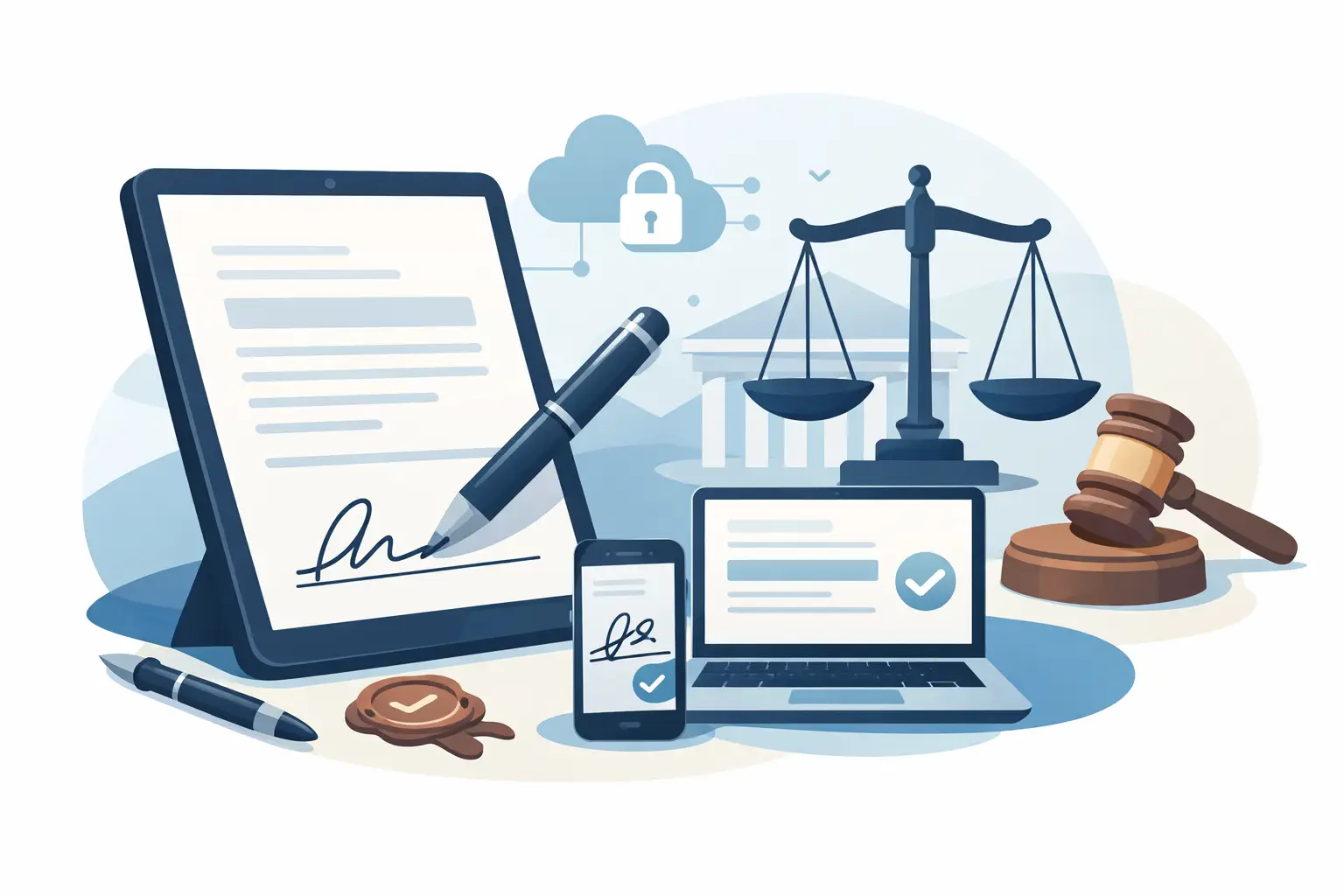
A contract stalled in someone’s inbox costs more than time. It can delay revenue, hiring, vendor onboarding, property transactions, or internal approvals that should have been finished the same day. So when teams ask, can legal documents be signed electronically, they are usually asking a more practical question: will this hold up, and can we move faster without creating risk?
For most business documents in the US, the answer is yes. Electronic signatures are legally valid in many common use cases, and they are widely used across sales, HR, operations, procurement, and real estate. But not every document is treated the same way, and not every signing process gives you the same level of proof. That distinction matters.
Can legal documents be signed electronically in the US?
In general, yes. US law recognizes electronic signatures for many agreements as long as basic legal requirements are met. Two frameworks drive this: the federal E-SIGN Act and state laws such as the Uniform Electronic Transactions Act, which most states have adopted in some form.
At a practical level, these laws say an electronic signature cannot be denied legal effect just because it is electronic. If the parties intend to sign and the process properly captures that agreement, an e-signature can carry the same weight as a handwritten one.
That said, legal validity does not come from putting a scribble on a screen. It comes from the full context around the signature: consent, intent, record retention, and the ability to show who signed and when. Businesses that treat e-signing as a complete workflow instead of a simple image pasted onto a PDF are in a much stronger position if a signature is ever questioned.
What makes an electronic signature legally valid?
The legal standard is usually more straightforward than people expect. A valid electronic signature process generally needs to show that the signer intended to sign the document, agreed to do business electronically when required, and that the signed record can be retained and later reproduced.
Intent matters because clicking a button, typing a name, drawing a signature, or applying a certificate all count only if the signer meant to adopt that action as their signature. That is why clear signing prompts, signer authentication, timestamps, and document completion records are so useful. They turn a simple action into defensible evidence.
Record integrity matters just as much. If the document can be altered after signing without detection, the value of the signature drops fast. Secure audit trails, tamper-evident seals, and completion certificates help show that the final version is the version everyone agreed to.
This is where many businesses get tripped up. They assume any digital mark is enough. Sometimes it is. But for higher-value or higher-risk documents, the process around the signature is what carries the real legal and operational weight.
Which legal documents can usually be signed electronically?
A large share of everyday business paperwork can be signed electronically. That includes sales contracts, NDAs, vendor agreements, employment offer letters, onboarding forms, internal approvals, service agreements, purchase orders, and many real estate and operations documents.
In these workflows, the main business advantage is speed without losing visibility. Teams can send documents for signature, route them to the right recipients, track status in real time, and keep a searchable record instead of chasing print-scan-email cycles.
For many organizations, the bigger shift is not just replacing ink. It is removing uncertainty. You know who has opened the document, who has signed, and where the process is stuck. That is a meaningful upgrade for legal, HR, finance, and sales teams that depend on completed documents to move work forward.
Which documents may need extra caution or another method?
This is where the answer becomes more nuanced. Some documents are excluded from standard e-signature treatment under federal or state rules, or they may require additional steps such as notarization, witnesses, specific disclosures, or stronger identity verification.
Examples can include certain wills, trusts, family law documents, court filings, foreclosure notices, and some notices related to utility cancellation, eviction, repossession, or insurance benefits. Real estate documents are often eligible for electronic signatures, but rules can vary depending on the transaction type, jurisdiction, and whether notarization is involved.
The practical takeaway is simple: most business agreements can be signed electronically, but sensitive categories deserve a policy check before rollout. If a document carries unusual statutory requirements, regulated disclosures, or high fraud exposure, use a platform and process that support the right level of assurance.
Not all e-signatures offer the same level of protection
This is one of the most important points for business buyers. “Electronic signature” is a broad category. A typed name at the bottom of an email is very different from a controlled signing workflow with identity checks, timestamps, IP logs, audit trails, and document certificates.
For lower-risk internal or routine agreements, a simple electronic signature may be enough. For higher-stakes contracts, regulated workflows, or transactions where signer identity could be challenged, you may need stronger controls. These can include one-time passcodes, government ID verification, or advanced electronic signature methods tied to digital certificates.
The right level depends on the document, the risk, and the likelihood of dispute. Overcomplicating every signature creates friction. Under-securing important agreements creates exposure. Smart teams match the signing method to the business case.
How to reduce risk when signing legal documents electronically
The safest approach is not complicated, but it does need to be consistent. Start with a platform that creates a clear, trackable signing flow instead of relying on emailed attachments and informal approvals. You want evidence built into the process, not reconstructed later.
Authentication should match the sensitivity of the document. For an internal acknowledgment, basic email access may be enough. For a high-value contract or compliance-heavy transaction, stronger signer verification makes sense.
You also need a clean audit trail. That means timestamps, signer actions, document history, and a completion record that shows exactly what happened. If a signature is ever challenged, that record becomes your first line of defense.
Document integrity is another must. Once signed, the file should be locked or made tamper-evident so any changes are detectable. And finally, keep records accessible. A legally valid electronic signature process also depends on your ability to retain and reproduce the completed agreement.
Can legal documents be signed electronically for regulated industries?
Often yes, but the margin for error is smaller. Teams in HR, finance, legal, healthcare-adjacent operations, and real estate often need more than basic convenience. They need proof, policy alignment, and controls that support compliance requirements.
That does not always mean buying the most complex enterprise system on the market. It means choosing a tool that gives you the right mix of usability and assurance. If your process is too hard for internal teams or external signers to complete quickly, adoption drops. If it is too light on controls, compliance concerns rise.
A practical middle ground is usually best: simple document preparation and routing for everyday speed, with optional stronger verification for documents that need extra trust. That model fits how real businesses operate. Not every form needs the same treatment, and your signature platform should reflect that.
What businesses should look for in an e-signature workflow
If your team handles legal documents regularly, the question is not just whether electronic signatures are legal. It is whether your workflow is fast, clear, and defensible.
Look for a process that lets you upload a PDF, place fields, assign recipients in order, track progress, and finish with a secure record of completion. Those basics remove most of the delays that slow down contract execution. Beyond that, features like team collaboration, mobile signing, reminders, and built-in editing help keep work moving without adding extra tools.
For documents that require more trust, stronger options matter. Advanced electronic signature capabilities, signer verification, and digital certificates can give legal, compliance, and operations teams more confidence without forcing every signer through a cumbersome process. That balance is where platforms like BeeSign stand out - practical for day-to-day business, with added assurance available when the stakes are higher.
The real opportunity here is not replacing pen and paper for the sake of it. It is shortening cycle times, reducing status confusion, and creating a signing process your team can rely on when the pressure is on.
If you are asking can legal documents be signed electronically, the better question is this: which of your documents should still be waiting on manual signatures? For most businesses, the answer is fewer than you think.
Ready to transform your workflow?
Start using BeeSign today and experience the future of document signing