Guide to Tamper Evident Audit Trails for Teams
This guide to tamper evident audit trails explains what to record, how sealing works, and how to preserve agreement evidence for review and disputes later.
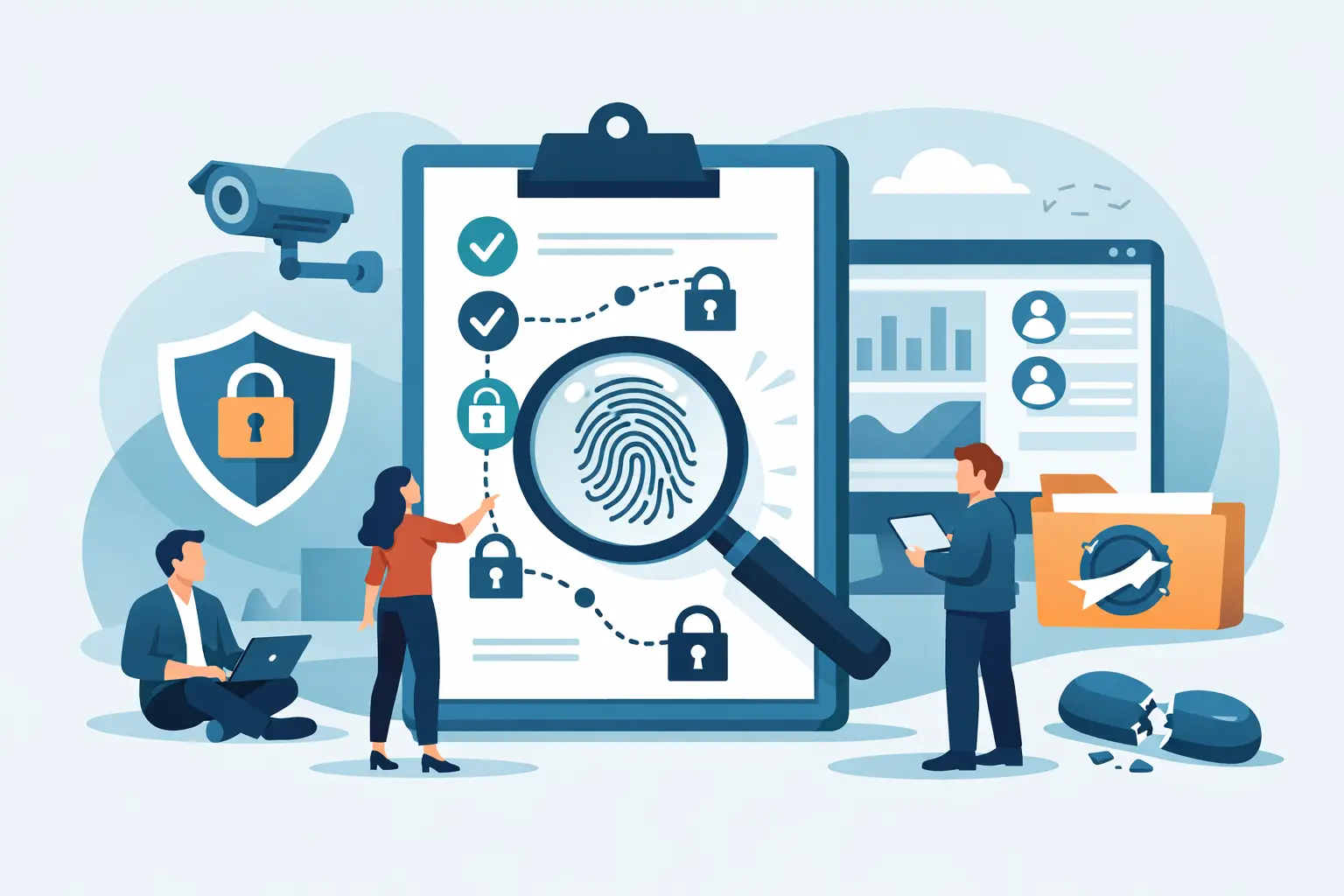
A contract can be signed in seconds, then questioned months later. When that happens, a screenshot of a signature is not enough. You need a clear record of what happened, when it happened, and whether the document or its history changed afterward. This guide to tamper evident audit trails explains how to create that evidence without slowing down the people trying to get work done.
What makes an audit trail tamper evident?
An audit trail is a chronological record of activity around a document. For an agreement workflow, that may include document creation, uploads, edits, recipient changes, invitations, views, approval decisions, signatures, reminders, and completion.
A tamper-evident audit trail adds a critical layer: it makes unauthorized changes detectable. It does not promise that nobody can ever alter data. That is an unrealistic standard for most software systems. Instead, it provides cryptographic and procedural evidence that reveals whether the document or recorded history has been changed since it was sealed.
That distinction matters in a dispute. A plain activity log may tell you that someone claims a document was signed at 2:14 p.m. A tamper-evident record helps show that the final document presented for review is the same one that was signed, and that the event history has not quietly been rewritten.
For sales, HR, legal, healthcare, and financial teams, this is not just a security feature. It is the difference between searching through emails and presenting a coherent chain of evidence.
The evidence your audit trail should capture
A useful trail tells a complete, understandable story. It should connect the agreement, the people involved, and the sequence of events without requiring a technical investigation to fill in the gaps.
At a minimum, capture a unique document or envelope ID; the document name and final version; event timestamps; the recipient or user associated with each event; the action performed; and relevant network details such as an IP address. Record the delivery method and destination, such as the email address used to send a signing invitation. If your workflow includes approvals, log who approved or rejected the document and the order in which those decisions occurred.
Signature events deserve additional detail. The record should show the signer identity presented in the workflow, the signing method, the timestamp, and the state of the document at signing. If the signer completed identity verification, retain evidence of the verification method and outcome. For higher-assurance workflows, that could include government ID capture, biometric face matching with liveness detection, or database validation.
IP addresses and email addresses are useful context, not magic proof. An IP address may represent an office network, mobile carrier, VPN, or shared household. An email inbox may be accessed by more than one person. The right level of evidence depends on the agreement’s risk. A routine vendor NDA may need standard electronic signature evidence, while a high-value or cross-border agreement may warrant stronger identity verification and an Advanced Electronic Signature workflow.
How tamper-evident sealing works
The technical core is usually a cryptographic hash. A hash turns a file or data set into a fixed-length value. Change even one character in the document and the resulting hash changes. Think of it as a highly sensitive digital fingerprint.
When an agreement is completed, the platform can calculate a hash of the final document and store it with the completion certificate or audit record. Later, the document can be hashed again and compared with the stored value. If the values match, the file has remained unchanged. If they do not, something changed.
A stronger design also protects the event history. Each event can be linked to the prior event through a hash chain, or the finalized audit record can be sealed as a whole. This makes it difficult to insert, remove, or revise an event without leaving evidence of the change.
Time matters, too. Your system should record timestamps consistently using a reliable server-side time source rather than relying only on a user’s device clock. For sensitive transactions, an independent trusted timestamp can add further assurance. The practical goal is simple: a reviewer should be able to see the order of events and trust that it was not reconstructed after the fact.
Build the trail into the workflow, not after it
The most reliable evidence is captured automatically as people work. Asking employees to save emails, export PDFs, and write down approval decisions after the fact creates gaps and invites inconsistency.
Start by mapping the moments that matter in your agreement process. A sales contract may move from draft to internal approval, then to the customer, then through a signing order. An employee onboarding packet may require a manager’s review, employee signature, and identity check. Each meaningful step should produce an event in the same system of record.
Keep the document lifecycle controlled. If someone needs to revise a document after it has been sent, record the revision, invalidate the prior signing request when appropriate, and issue a new version. Do not allow a completed PDF to be swapped in place while retaining the old certificate. That defeats the purpose of a sealed record.
Use clear statuses such as draft, awaiting approval, sent, viewed, completed, declined, expired, and voided. Status labels make the trail easier for operators to follow and make exceptions visible. A document that expired before signature tells a very different story from one that was signed and later revoked.
Protect the system that creates the evidence
A seal is only as credible as the environment around it. Security controls should protect both the documents and the ability to alter their records.
Encryption protects confidentiality. For example, TLS protects data in transit and 256-bit AES protects it at rest. Access controls protect who can view, send, edit, download, or administer agreements. Workspace isolation helps ensure that one customer or business unit cannot access another’s records. Multi-factor authentication, including TOTP where appropriate, reduces the chance that a compromised password becomes an administrative takeover.
Also separate routine workflow permissions from high-risk administrative actions. A sales rep may be allowed to send an approved template but not edit a completed agreement. A workspace administrator may manage users but should not be able to silently erase finalized evidence. The exact model depends on your organization, but least-privilege access is a strong default.
Retention is another practical decision. Keep finalized agreements, certificates, and audit records for as long as your legal, regulatory, and contractual obligations require. That period varies by document type and jurisdiction. What matters is having a documented policy, applying it consistently, and ensuring records remain readable and verifiable when needed.
Make audit records useful in a real dispute
A technically sound log is less valuable if nobody can interpret it. Your completion certificate or evidence package should be easy to export, read, and associate with the final document. It should identify the agreement, list the event sequence, show timestamps and relevant participant information, and include the seal or hash details needed to verify integrity.
Avoid an evidence package that requires a specific vendor dashboard to understand. Your legal team, external counsel, auditor, or customer may need to review it years later. Plain-language event descriptions and a stable, downloadable record reduce friction when time is tight.
Before adopting a workflow, test the review process. Ask a simple question: if a signer disputes an agreement six months from now, can our team retrieve the final document and its evidence package quickly? Can we explain who received it, who viewed it, what identity checks occurred, and whether the document has changed? If the answer involves several inboxes, shared drives, and manual detective work, the process needs work.
Questions to ask an eSignature provider
When evaluating a platform, look beyond the phrase “audit trail.” Ask whether every send, view, signature, approval, and document status change is logged automatically. Confirm how the final document and certificate are sealed, whether tampering can be detected, and how you can export evidence for independent review.
Ask about identity assurance separately. Standard eSignatures are appropriate for many business transactions, but certain use cases need more confidence in who signed. Understand the available verification methods, the evidence retained, and whether the provider supports eIDAS-compliant Advanced Electronic Signatures when your transaction calls for them.
Finally, ask who controls the records. Businesses with strict data policies may need documents and certificates stored in their own cloud environment, while product teams may need an API that creates the same traceable workflow their users would see in the dashboard. BeeSign combines tamper-evident sealing, detailed agreement events, identity verification options, and API-driven workflows so teams can move quickly without treating evidence as an afterthought.
The best audit trail is the one your team never has to think about during a normal signing process, yet can rely on completely when the stakes rise.
Ready to transform your workflow?
Start using BeeSign today and experience the future of document signing