Identity Verification in Real Estate Deals: 2026 Guide
Learn essential strategies for effective identity verification in real estate deals. Protect against fraud and ensure compliance in 2026.

Identity verification in real estate deals is the process of confirming that every party to a property transaction is who they claim to be, which is the foundation of fraud prevention and regulatory compliance. Know Your Customer (KYC) standards require collecting government-issued photo ID and recent proof of address at minimum, with enhanced due diligence applied to high-risk or high-value transactions. Roughly 3 out of 10 title insurance companies experienced seller impersonation fraud attempts in 2023, mostly targeting vacant land. That figure alone tells you the threat is not theoretical. Deepfake technology and low-cost AI fraud tools have made remote transactions especially vulnerable, and the standard industry term for the full compliance process is Customer Due Diligence (CDD), which encompasses identity checks, source-of-funds verification, and sanctions screening.
What are the types of identity verification used in property deals?
The four core methods of identity authentication in real estate are document verification, biometric matching, manual out-of-band questioning, and database cross-referencing. Each method addresses a different layer of risk, and the strongest verification programs use all four together.
Document verification
Government-issued photo ID, such as a passport, driver’s license, or national ID card, is the baseline for every transaction. KYC compliance mandates collecting this ID alongside recent proof of address, such as a utility bill or bank statement dated within the last three months. For corporate buyers or sellers, you must also identify every beneficial owner holding more than 25% of shares. That requirement closes a common loophole where fraudsters hide behind shell companies.

Biometric matching
Biometric verification compares a live selfie or video feed against the photo on a submitted ID document. This method is especially critical for remote or cross-border deals where you cannot meet a client in person. Deepfake-related scams in real estate are rising 40% year over year, and a live video notarization deepfake attempt on a $100,000 vacant land sale has already been flagged in the field. Real-time liveness detection, which checks that a person is physically present and not a recorded video, is now a practical necessity for high-value deals.
Manual out-of-band questioning
Single-point verification is inadequate against sophisticated fraud. Asking unexpected questions about neighbors, local landmarks, or property history forces a fraudster to know details that a stolen ID cannot supply. This technique works best when combined with document and biometric checks, not as a standalone method.
Database cross-referencing
Digital verification tools check client information against sanctions lists, politically exposed persons (PEP) databases, and public records. KYC in real estate legally requires screening against sanctions under regulations such as the EU Anti-Money Laundering directives and the U.S. Bank Secrecy Act. Ongoing monitoring is also required when a transaction spans several months, because a client’s risk profile can change between listing and closing.
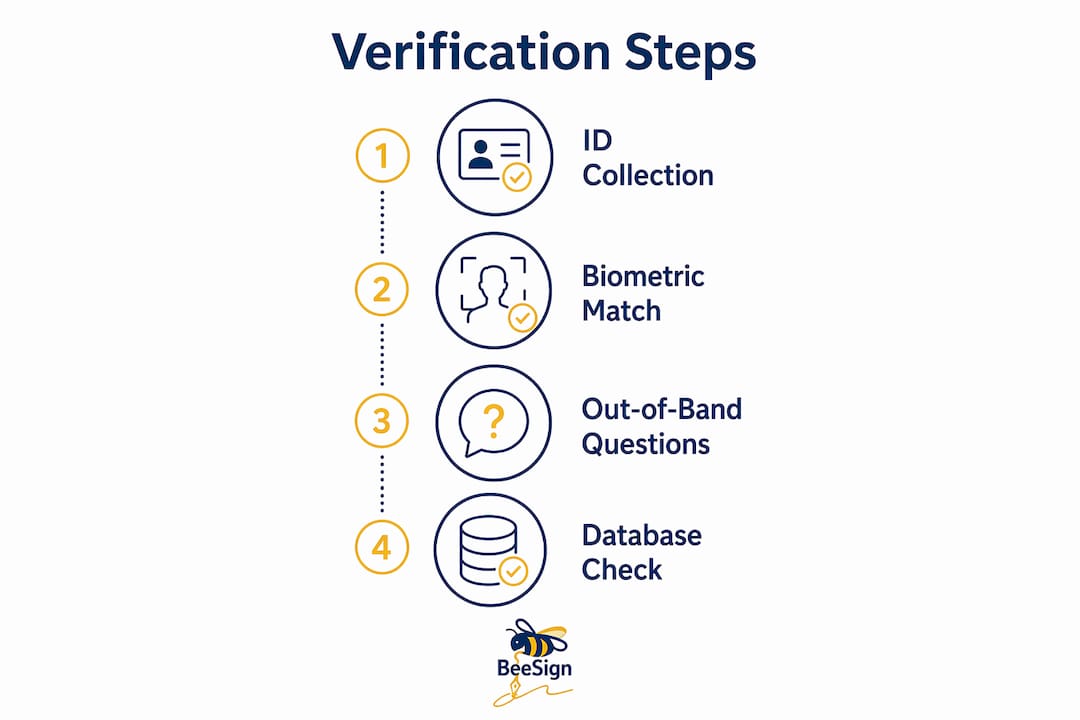
| Verification method | Best use case | Risk level addressed |
|---|---|---|
| Government-issued ID check | All transactions, first contact | Low to medium |
| Biometric liveness detection | Remote, cross-border, high-value deals | High |
| Out-of-band manual questioning | Suspected fraud, vacant land sales | High |
| Database and sanctions screening | Corporate entities, ongoing monitoring | Medium to high |
Pro Tip: Collect ID at first contact, not at closing. Waiting until the final stage gives fraudsters more time to build a convincing paper trail.
Why does identity verification matter in real estate?
Seller impersonation fraud is the most direct financial threat identity checks prevent. A fraudster poses as the legitimate property owner, lists the property for sale, collects the proceeds, and disappears before anyone notices. 16% of title insurance companies that experienced these attempts made payout claims related to fraudulent transactions. That translates to real financial loss for title companies, buyers, and lenders.
Beyond direct fraud, insufficient verification creates serious legal exposure. Failing to meet KYC or CDD requirements can result in regulatory fines, license suspension, and personal liability for the agent or broker involved. The consequences extend to every party in the chain.
The fraud threat has grown more technical. AI-generated deepfakes now allow criminals to impersonate sellers convincingly during live video calls, which were once considered a reliable identity check. Experts advise shifting from a trust-based to a verify-everything mindset because low-cost AI tools have made non-physical transaction fraud accessible to a much wider range of criminals.
“Remote notarization without strong checks is a key vector for fraud. The assumption that a live video call confirms identity is no longer safe. Liveness detection and document validation must accompany every remote signing session.”
Speed of response also matters. Acting within 24 hours after detecting suspicious activity significantly increases the chance of preventing funds from being moved irretrievably. Alerting the receiving bank immediately is the single most effective recovery action available once fraud is suspected.
How to implement an identity verification process in real estate transactions
A structured, step-by-step process prevents the gaps that fraud rings exploit. The goal is a continuous verification chain from first contact through closing, with no handoff left unchecked.
-
Initiate verification at first contact. Collect government-issued photo ID and proof of address before any property details are shared or agreements are signed. This sets the compliance baseline and signals to all parties that verification is non-negotiable.
-
Run document authentication. Use a digital verification platform to check ID documents for tampering, expiration, and consistency with the client’s stated details. Flag any mismatch immediately and do not proceed until it is resolved.
-
Complete biometric liveness detection. For remote clients, require a real-time selfie or video check against the submitted ID. Platforms that offer eIDAS-compliant identity verification meet the legal standard for Advanced Electronic Signatures in the European Union and equivalent standards in other jurisdictions.
-
Screen against sanctions and PEP databases. Run every client through relevant sanctions lists before proceeding. For corporate entities, document every beneficial owner above the 25% threshold.
-
Apply enhanced due diligence for high-risk deals. High-value transactions, vacant land sales, and cross-border deals require deeper investigation. This includes source-of-funds documentation, additional reference checks, and senior sign-off before proceeding.
-
Maintain verification continuity across all handoffs. Security silos create vulnerabilities when each party, such as the agent, title company, and lender, relies on isolated checks. Share verified identity data across the transaction chain so no party starts from zero.
-
Document everything for audit purposes. Compliance platforms with real-time tracking and audit logs protect you if a transaction is later challenged. Beesign’s platform centralizes this documentation, making it retrievable for regulatory review without manual file searches.
| Transaction stage | Verification action | Responsible party |
|---|---|---|
| First contact | ID collection, initial document check | Agent or broker |
| Onboarding | Biometric check, sanctions screening | Agent or compliance officer |
| Contract signing | Identity confirmation, digital signature | Agent, title company |
| Closing | Final ID reconfirmation, audit log review | Title company, lender |
Pro Tip: If a client pushes back on verification requirements, frame it as protection for them, not just for you. Framing verification as protective builds trust and reduces friction without compromising compliance.
What are common challenges in property deal identity checks?
Client resistance is the most frequent obstacle. Clients often view identity checks as intrusive, especially when they are asked for multiple documents or biometric data. The solution is to explain the legal requirement clearly and position the process as standard practice that protects their transaction, not just your compliance record.
Remote and cross-border verification adds complexity. Document formats, ID standards, and legal requirements vary significantly between countries. A Brazilian passport, a UAE national ID, and a U.S. driver’s license all require different validation logic. Digital verification platforms that support multiple document types and jurisdictions reduce this burden considerably.
Detecting forged documents and deepfakes beyond automated checks requires human judgment. Fraudsters increasingly use AI-driven deepfakes and fake IDs to bypass automated systems, which means defense-in-depth with manual verification is still necessary for high-risk deals. Automated tools catch most fraud, but a trained human reviewer catches what algorithms miss.
Keeping up with regulatory changes is an ongoing requirement. Integrated verification chains across all transaction participants prevent the security gaps that fraud rings exploit. Assign one compliance owner per transaction to track regulatory updates and confirm that every handoff meets the current standard.
Key warning signs that require immediate escalation:
- A seller who cannot answer basic questions about the property or its history
- ID documents with inconsistent fonts, spacing, or photo quality
- Requests to conduct all communication through a single, unverified channel
- Pressure to close quickly without completing standard verification steps
- A beneficial owner structure that obscures the ultimate controlling party
What I’ve learned about verification that most guides won’t tell you
A professional view on where identity verification in real estate is heading
The industry has spent years treating identity verification as a closing-stage formality. That approach is now a liability. Every transaction touchpoint, from the first inquiry email to the final wire transfer, is a potential entry point for fraud. The verify-everything mindset is not paranoia. It is the only rational response to a threat environment where a convincing deepfake costs less than a tank of gas.
What I find most underestimated is the human layer. Technology handles volume and speed, but manual out-of-band questioning still catches fraud that automated systems miss. The best verification programs combine both without treating one as a substitute for the other. Platforms like Beesign that integrate document signing with identity verification reduce the gap between these layers by keeping all verification data in one auditable record.
The next wave of fraud will target the handoff points between agents, title companies, and lenders. Shared verification data across the full transaction chain is not a nice-to-have feature. It is the structural requirement that prevents fraud rings from exploiting the gaps between parties who each assume someone else already verified the client.
Act fast when something looks wrong. The 24-hour window for alerting banks after suspected fraud is not a guideline. It is the practical boundary between recovery and total loss.
— Mustafa Abusharkh
Beesign’s verification tools for real estate professionals
Real estate professionals need verification that works at every stage of a deal, not just at signing.

Beesign centralizes identity verification, contract management, and digital signing in one platform built for compliance with ESIGN, eIDAS, and HIPAA. For real estate teams managing multiple transaction handoffs, Beesign’s real estate verification platform connects biometric checks, document validation, and audit logging into a single workflow. You get real-time tracking, automated compliance alerts, and a complete audit trail without chasing documents across email threads. Beesign also supports white-label deployment, so brokerages can run the full verification chain under their own brand. See the full feature set at beesign.net.
FAQ
What is identity verification in real estate?
Identity verification in real estate is the process of confirming that buyers, sellers, and other transaction parties are who they claim to be, using government-issued ID, biometric checks, and database screening. It is legally required under KYC and Customer Due Diligence regulations in most jurisdictions.
Why is seller impersonation fraud so common in vacant land sales?
Vacant land is frequently targeted because the owner often lives elsewhere and has no visible presence on the property, making it easier for a fraudster to pose as the seller without being caught quickly. Roughly 3 out of 10 title insurance companies experienced these attempts in 2023.
What documents are required for KYC in a real estate transaction?
Standard KYC requires a government-issued photo ID and recent proof of address, such as a utility bill or bank statement dated within the last three months. Corporate entities must also provide documentation identifying every beneficial owner holding more than 25% of shares.
How do deepfakes affect remote real estate transactions?
Deepfakes allow criminals to impersonate sellers convincingly during live video calls, which were previously considered a reliable identity check. Real-time liveness detection and document validation must accompany every remote signing session to counter this threat.
What should you do if you suspect fraud during a transaction?
Alert the receiving bank and your compliance officer within 24 hours of detecting suspicious activity. Acting within that window significantly increases the chance of preventing funds from being moved irretrievably.
Recommended
Ready to transform your workflow?
Start using BeeSign today and experience the future of document signing