What Is eIDAS Advanced Signature? A Clear Guide
What is eIDAS advanced signature? See how identity checks, signer control, tamper protection, and audit evidence support trusted EU agreements.
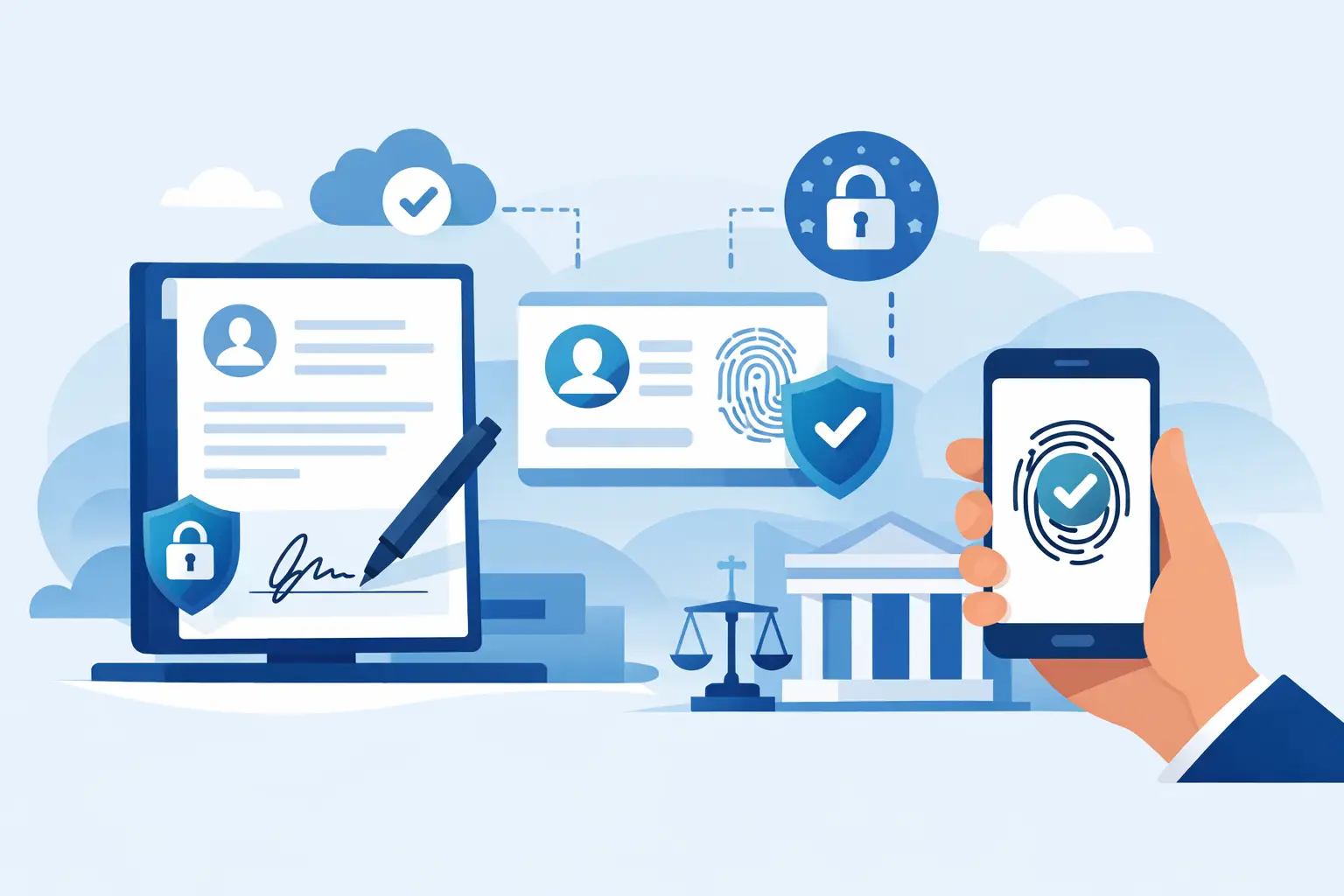
A signed PDF is not automatically an identity-verified agreement. When a transaction needs stronger proof of who signed, what they agreed to, and whether the document changed afterward, the question becomes: what is eIDAS advanced signature?
An eIDAS Advanced Electronic Signature, often shortened to AdES, is a signature level defined by the European Union's eIDAS Regulation. It is designed to create a stronger, evidence-backed connection between a signer and a document than a basic click-to-sign workflow alone. For businesses handling EU agreements, this can be a practical way to move quickly without treating identity assurance as an afterthought.
What is an eIDAS Advanced Signature?
An Advanced Electronic Signature is an electronic signature that meets specific requirements under Article 26 of eIDAS. In plain English, it must be tied to a specific signer, support identification of that signer, remain under the signer's control, and reveal any later changes to the signed document.
That definition matters because an advanced signature is not simply a visual signature image, a typed name, or a checkbox saying “I agree.” Those methods can still be valid electronic signatures in many situations. But an AdES adds controls and evidence intended to make disputes harder and investigations clearer.
For a sales team, that may mean confirming the person approving a high-value contract is who they claim to be. For HR, it can mean retaining stronger evidence around employee onboarding paperwork. For legal and compliance teams, it means having a clearer record if someone later questions the agreement.
The four requirements behind an advanced signature
eIDAS sets out four core conditions. The technical implementation can vary, but the outcome must support each one.
It is uniquely linked to the signer
The signature needs to be connected to one identifiable person, not merely to an email inbox shared by a department. A reliable workflow records the recipient, the signature event, and the evidence used to associate that person with the agreement.
It can identify the signer
An advanced signature must make it possible to identify who signed. Depending on the risk level, this may involve verified email and phone details, government ID capture, biometric face matching with liveness detection, database validation, or a combination of methods.
There is no one universal identity-check method for every agreement. The right level depends on the transaction, the value at stake, internal policy, and any sector-specific requirements. A routine internal acknowledgment may need less than a financing document or a regulated customer form.
It is created under the signer's control
The signer must have control over the signature creation process with a high level of confidence. This is why secure access, one-time verification steps, and clear recipient authentication matter. If a colleague can casually sign on someone else's behalf using an open link or shared credentials, the evidence is weaker.
Control does not mean every signer needs specialized hardware. Modern cloud workflows can support strong signer control through appropriately designed authentication and verification. The key is showing that the person who completed the signature action was the verified recipient.
It detects changes after signing
The signed document must be linked to the signature in a way that exposes subsequent changes. This is commonly achieved through cryptographic sealing and document hashing. If someone alters a term, swaps a page, or changes a date after signature, the integrity check should fail or show that the document is no longer in its original signed state.
A tamper-evident seal is not just a technical feature. It protects the agreement's story: this is the version presented to the signer, this is when they signed it, and this is the version retained afterward.
Advanced vs. simple vs. qualified electronic signatures
eIDAS recognizes more than one level of electronic signature. Choosing the right one is about risk and requirements, not automatically choosing the most complex option.
A simple electronic signature can be a typed name, signature image, click-to-accept action, or basic e-sign workflow. It is often appropriate for lower-risk documents, especially where a strong audit trail already captures recipient activity, timestamps, and IP addresses.
An Advanced Electronic Signature adds the identity, control, and tamper-detection requirements described above. It is a strong fit when a business wants higher confidence in the signer's identity without introducing unnecessary friction into every agreement.
A Qualified Electronic Signature, or QES, sits at the highest eIDAS level. It requires a qualified certificate and a qualified signature creation device or equivalent qualified remote service. Under eIDAS, a QES has the equivalent legal effect of a handwritten signature across EU member states.
That does not make AdES a second-rate option. Many business workflows use advanced signatures because they balance assurance, speed, and a practical signer experience. However, a QES may be necessary when a law, regulator, counterparty, or country-specific formality explicitly requires it.
Why identity verification changes the equation
An audit trail can show that a link was sent to an email address and opened from an IP address. Helpful? Yes. Definitive proof of identity? Not always.
Identity verification fills that gap. It adds evidence that the person completing the signing step matched a verified identity record. Stronger workflows may capture a government-issued ID, compare it to a live facial image, and use liveness detection to reduce the risk of a photo, recording, or impersonation attempt being used instead.
This is especially useful for agreements involving sensitive data, high-value commitments, remote onboarding, financial workflows, and cross-border counterparties. It also helps organizations set a consistent policy rather than asking each team to guess how much verification is enough.
The trade-off is signer friction. Identity verification takes longer than clicking a link, and some recipients may need support if their ID capture fails. The smart approach is to reserve higher-assurance signing for the documents that truly need it. Fast should not mean careless, but secure does not have to mean slow.
What evidence should your workflow retain?
An advanced signature is strongest when the organization can produce a clear evidence package, not just a final PDF. The exact details vary by provider and use case, but a well-designed workflow should retain the signed document, tamper-evident integrity data, signer identity-verification results, and a detailed audit trail.
That audit trail should capture meaningful events: when the document was created and sent, when the recipient viewed it, authentication or verification steps completed, signature timestamps, and relevant technical information such as IP addresses. It should also show the signing order when multiple people are involved.
Security around that evidence matters too. Encrypting documents in transit with TLS and at rest with 256-bit AES helps protect sensitive agreements. Expiring links, recipient authentication, workspace isolation, and role-based access controls reduce the chance that the wrong person can access a document before or after it is signed.
Where advanced signatures make sense
Not every document needs the same assurance level. Advanced electronic signatures are often worth considering for customer contracts with material commercial value, employment agreements and sensitive HR forms, legal documents, healthcare or financial paperwork, and transactions where the signer is remote or unknown to your team.
They can also be useful when a company serves EU customers and wants a repeatable signing standard across regions. Instead of manually chasing IDs over email or maintaining separate tools for signature collection and verification, teams can build identity checks into the agreement workflow itself.
For example, BeeSign can combine document signing with government ID capture, biometric face matching with liveness detection, and database validation. That allows teams to issue eIDAS-compliant Advanced Electronic Signatures while retaining a complete, tamper-evident audit record in the same workflow.
A practical way to choose your signature level
Start with the document, not the feature list. Ask what happens if the signer disputes the agreement, whether a law or counterparty requires QES, how confidently you need to identify the signer, and how much friction the recipient can reasonably tolerate.
For everyday, low-risk documents, a standard electronic signature with strong audit logging may be enough. For higher-risk agreements where identity confidence and document integrity matter, AdES is often the more appropriate choice. When a qualified signature is mandatory, use QES rather than assuming advanced is interchangeable.
Legal enforceability also depends on the underlying contract, consent, intent, record retention, and applicable local rules. eIDAS provides an important framework, but it does not remove the need to confirm any document-specific formalities with qualified legal counsel.
The best signature workflow is the one that gives every agreement the assurance it needs without turning a two-minute approval into a two-week project. Put identity verification and evidence where risk demands it, keep routine signing simple, and let your teams move from draft to signed with confidence.
Ready to transform your workflow?
Start using BeeSign today and experience the future of document signing