eIDAS Regulation Trends Businesses Need to Track
eIDAS regulation trends are changing digital identity and signing. See what businesses need for secure, auditable EU agreement workflows now and next too.
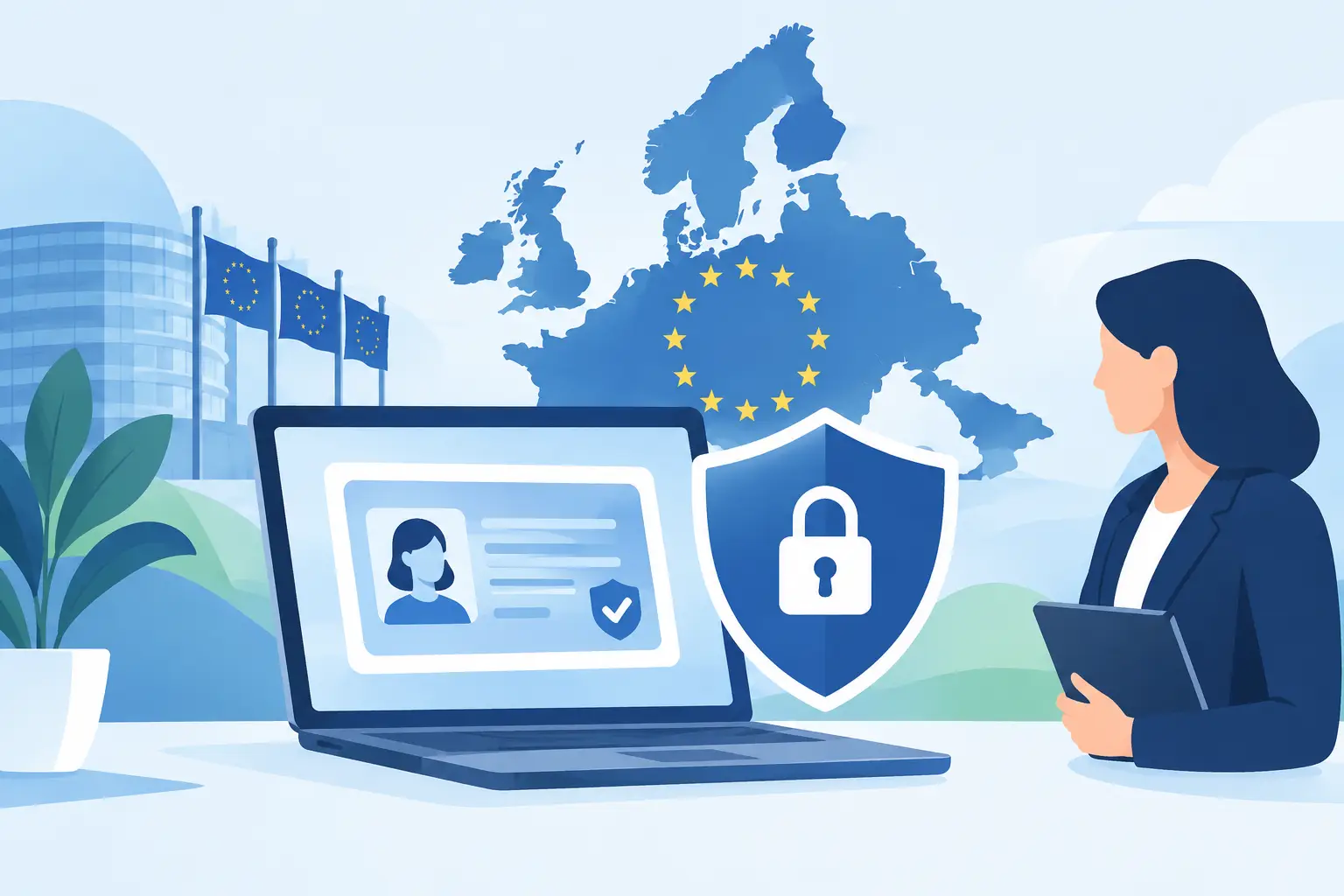
A customer signs a contract from Paris, an approver reviews it in Chicago, and legal needs to prove exactly what happened months later. That is where eIDAS regulation trends stop being a policy topic and become an operational one. For businesses working with EU customers, employees, suppliers, or regulated data, the question is no longer whether to digitize agreements. It is whether your signing and identity process can show the right evidence when it matters.
The revised eIDAS framework, often called eIDAS 2.0, is pushing digital signatures, verified identity, and cross-border trust closer together. It does not mean every agreement suddenly requires the highest signature level. It does mean teams need a clearer way to match each workflow to its risk, geography, and proof requirements.
The eIDAS Regulation Trends Reshaping Agreements
Digital identity is becoming part of the transaction
The biggest change is the EU Digital Identity Wallet framework. EU member states are working toward making digital identity wallets available to citizens and residents, creating a more consistent way for people to prove identity and share verified attributes across borders.
For agreement workflows, this changes the conversation from "Did someone click to sign?" to "What identity evidence was used, and was it appropriate for this transaction?" A wallet may eventually help a signer share verified information such as their name, age, professional qualification, or corporate role without repeatedly uploading documents or relying on manual checks.
The practical impact will arrive gradually and differently by country and industry. Businesses should not pause their current eSignature programs waiting for universal wallet adoption. They should build workflows that can accept stronger identity methods when a use case calls for them.
More attention on identity assurance before signing
An electronic signature can be legally valid even when it is simple. Under eIDAS, a document generally cannot be rejected solely because it was signed electronically. But legal validity and evidentiary strength are not the same thing.
When a dispute, high-value transaction, or regulated process is involved, organizations need to show more than a completed signature field. They may need evidence connecting the signer to the action, showing their intent, and demonstrating that the signed document was not altered afterward.
That is why identity verification is becoming a core part of agreement design. Government ID capture, biometric face matching with liveness detection, and database validation can provide stronger confidence that the intended person is signing. The right combination depends on risk. A routine sales renewal may need email verification and a detailed audit trail. A financial authorization or sensitive healthcare form may justify a higher-assurance identity step.
Advanced and qualified signatures are being used more deliberately
eIDAS recognizes three main signature levels: simple electronic signatures, Advanced Electronic Signatures, and Qualified Electronic Signatures.
A simple electronic signature can cover many everyday agreements. It may include a typed name, a click-to-sign action, or a signature image, supported by sensible evidence such as timestamps, signer authentication, and an audit trail.
An Advanced Electronic Signature, or AES, must be uniquely linked to and capable of identifying the signer, created under the signer’s control, and connected to the signed data in a way that reveals later changes. For organizations that need stronger proof without turning every contract into a heavy manual process, AES is often the practical middle ground.
A Qualified Electronic Signature, or QES, carries the strongest legal effect under eIDAS and is equivalent to a handwritten signature throughout the EU. It requires a qualified certificate and qualified signature creation process. QES can be essential where local law, a counterparty, or a specific transaction demands it. It can also introduce more steps for the signer, so it should be reserved for situations where that added assurance is worth the friction.
The trend is not "use QES for everything." It is to create a clear signature policy: simple signatures for low-risk volume, identity-verified AES for higher-risk workflows, and QES where the law or transaction requires it.
Proof Has to Travel With the Document
Cross-border business exposes weak agreement workflows quickly. A PDF in a shared drive may show a signature mark, but it rarely answers the questions that compliance teams, auditors, and courts ask: Who received the document? How were they authenticated? Which version did they view? When did they sign? Was anything changed later?
Modern eIDAS-aligned processes are shifting toward evidence that stays connected to the agreement. That means tamper-evident sealing, complete event logs, secure timestamps, and a record of the identity and authentication method used. An audit trail should be usable, not just technically available. Your legal or operations team should be able to retrieve it without chasing screenshots across inboxes.
Security controls matter here because evidence is only persuasive when the surrounding system is credible. Encryption in transit with TLS, encryption at rest with 256-bit AES, access controls, workspace separation, and expiring links all reduce the chance that an agreement process becomes difficult to defend.
For product teams, the same rule applies when signatures are embedded through an API. The agreement workflow inside your application should create the same consistent record as the workflow in an administrative dashboard. A custom front end should not mean custom, incomplete evidence.
Trust Services Are Expanding Beyond Signatures
The revised framework also expands attention beyond signing alone. It supports a broader set of trust services and verified electronic attributes, including electronic attestations and other mechanisms that can help organizations rely on validated business information.
This matters for onboarding and approvals. Instead of asking a customer to enter the same company details into multiple forms, a future workflow may verify relevant attributes from a trusted source. Instead of manually confirming whether an individual can act for an organization, a process may be able to use a verified role or mandate where available.
There is a trade-off. More verified data can reduce fraud and manual review, but organizations should only collect what the workflow needs. Data minimization remains a sound operational principle and a privacy expectation. A lease application, employment agreement, and vendor contract do not need the same identity data or retention period.
What Businesses Should Do Now
The regulatory direction is clear, but implementation details, national rules, and market adoption will vary. The best response is not to redesign every workflow at once. Start by making signing policy and evidence standards repeatable.
Focus on four practical changes:
- Classify your agreement types by risk. Separate routine agreements from documents involving high value, sensitive data, regulated activity, or a heightened risk of impersonation.
- Set a signature and identity standard for each class. Define when a standard electronic signature is enough, when verified identity and AES are appropriate, and when a QES or local legal review is necessary.
- Standardize the evidence package. Require timestamps, recipient and signer events, document integrity controls, authentication details, and easy export or retrieval for every completed agreement.
- Keep data control in the design. Review where documents, certificates, and identity data are stored, who can access them, how long they are retained, and whether your provider can support your infrastructure requirements.
This approach also improves speed. When legal, sales, HR, and operations share approved templates and clear signing rules, teams do not have to reinvent the approval path for every document. They can send the right agreement with the right identity check and move on.
Where a Flexible Platform Helps
A single agreement platform can make these policies easier to run at scale. For example, BeeSign lets teams create templates, set signing order and approvals, capture identity verification when needed, and keep tamper-evident records of sends, views, and signatures. That gives a team one operating model for routine contracts and higher-assurance workflows rather than a patchwork of email, PDFs, and separate identity tools.
The key is flexibility. An organization with high-volume sales contracts may prioritize quick mobile signing and automatic reminders. A compliance team may need identity-verified Advanced Electronic Signatures, stricter permissions, and detailed audit evidence. A product team may want those same capabilities delivered through an API under its own brand and domain.
No platform can decide your legal requirements for you. Certain document types, sectors, and jurisdictions can impose special formalities, and qualified signatures may require services that meet specific eIDAS requirements. Build a process that flags those exceptions early instead of discovering them after a deal is signed.
The useful next step is simple: take your five most common agreement workflows and ask what you could prove about each signature six months from now. If the answer is clear, accessible, and proportionate to the risk, you are building for where eIDAS is headed.
Ready to transform your workflow?
Start using BeeSign today and experience the future of document signing