FERPA Compliant Digital Signing Practices for Admins
Discover FERPA compliant digital signing practices that protect student records. Ensure secure workflows with essential controls and best practices.

FERPA-compliant digital signing practices are the set of technical, procedural, and contractual controls that protect student education records during electronic signature workflows. The Family Educational Rights and Privacy Act (FERPA) requires institutions to safeguard personally identifiable information (PII) in student records, and that obligation does not pause when a document moves to a digital signing platform. The ESIGN Act provides the legal foundation for electronic signatures in the United States, but ESIGN compliance alone does not satisfy FERPA. Administrators must also address identity verification, access control, vendor agreements under 34 CFR 99.31(a)(1), and comprehensive audit trails before any signing workflow goes live.
1. Ferpa compliant digital signing practices start with data classification
Before you configure a single signing template, you need to know exactly which data fields in your documents qualify as FERPA-protected PII. Student names, ID numbers, enrollment status, grades, and disciplinary records all fall under FERPA protection. A data classification audit maps every field in your signing workflows and assigns a sensitivity level to each one.

Institutions must conduct data classification audits and enforce need-to-know access before deploying any signing platform. That means limiting who can view, send, or countersign documents based on their role, not their convenience.
Key steps in a classification audit:
- List every document type used in enrollment, consent, and records workflows.
- Tag each data field as FERPA-protected, sensitive but not FERPA-covered, or general administrative.
- Map which staff roles need access to each document type.
- Document your findings and update the audit annually.
Pro Tip: Run your classification audit before you evaluate any vendor. Knowing your data profile lets you ask vendors specific questions about field-level encryption and access logging rather than accepting generic security claims.
2. Verifying signer identity and intent in FERPA workflows
Identity verification is the step most institutions underinvest in. A signature is only legally defensible if you can prove the right person signed it with clear intent. FERPA audits and legal disputes both hinge on this point.
Intent to sign must be clearly demonstrated, typically through click-through consent mechanisms standardized across your institution. A vague “I agree” checkbox buried in a form does not meet that standard. Your platform should present a distinct, affirmative consent step before the signature field appears.
Accepted identity verification methods include:
- Multi-factor authentication (MFA): Requires the signer to confirm identity through a second channel, such as a one-time code sent to a verified phone number or email.
- Institutional single sign-on (SSO): Ties the signing session to the signer’s verified institutional account, creating a direct link between identity and signature event.
- Government ID checks: Used for high-stakes documents like financial aid agreements, where a third-party identity verification service confirms the signer’s identity against a government-issued document.
Beesign supports document signing with identity verification built directly into the workflow, so you do not need a separate verification tool.
Pro Tip: Standardize your click-through consent language across all document types. Inconsistent wording creates gaps that are hard to defend in an audit. One approved consent statement, reviewed by legal counsel, applied institution-wide.
3. Implementing access controls, encryption, and audit trails
Technical controls are the backbone of any FERPA-compliant signing setup. Three areas require your direct attention: role-based access control (RBAC), encryption, and audit trails.
Role-based access control
RBAC restricts what each user can do inside the signing platform based on their assigned role. A financial aid counselor should be able to send and receive award letters but should not be able to access medical consent forms. Role-based access controls integrated with existing district databases reduce duplicate data entry and increase security at the same time.
Encryption standards
Secure access controls, encryption in transit and at rest, and detailed audit trails are required components for FERPA compliance. Encryption in transit protects data as it moves between the signer’s browser and your platform. Encryption at rest protects stored documents and signing records. Beesign’s encryption and security standards cover both layers.
Audit trails
An audit trail is the legal record of every signing event. Digital signing platforms must generate comprehensive audit trails with timestamps, IP addresses, and signature events for full traceability. That log is your evidence in a dispute or a federal audit.
| Audit trail element | Why it matters for FERPA |
|---|---|
| Signer identity confirmation | Proves the correct person completed the signing event |
| Timestamp (date and time) | Establishes when consent was given, critical for enrollment records |
| IP address and device info | Supports geographic and device-level verification |
| Identity verification steps | Documents the method used to confirm signer identity |
| Document version hash | Confirms the signed document has not been altered after signing |
Pro Tip: Request a sample audit log from any vendor you evaluate. If the log does not include identity verification steps and IP data, the platform does not meet FERPA audit trail requirements.
4. Ensuring vendor compliance through contracts and oversight
Your vendor is not automatically a FERPA-compliant partner just because they offer a secure product. Generic software license agreements do not meet FERPA standards without specific contractual clauses. You need a signed Data Processing Agreement (DPA) that explicitly references the school official exception under 34 CFR 99.31(a)(1) and prohibits the vendor from re-disclosing student data for any other purpose.
“Treating signing vendors as ‘school officials’ with documented, ongoing agreements is key to maintaining FERPA compliance.” — FERPA compliance guidance for EdTech vendors
Your DPA must address these points:
- FERPA school official exception: The vendor must acknowledge they are acting as a school official under 34 CFR 99.31(a)(1) and are bound by the same restrictions as your staff.
- Data re-disclosure prohibition: The vendor cannot use student data for product improvement, marketing, or any purpose outside the contracted service.
- Subprocessor disclosure: The vendor must list all subprocessors (cloud storage, identity verification services) and confirm each one is also bound by FERPA-equivalent terms.
- Breach notification timeline: The DPA must specify how quickly the vendor must notify you of a data breach, typically within 72 hours.
- Post-termination data deletion: Explicit post-termination data deletion clauses, including written confirmation of backup destruction, are required to avoid compliance violations after a contract ends.
FERPA compliance requires continuous vendor management with annual security reviews, not a one-time contract signature. Schedule a documented annual review with every signing vendor and keep records of each review in your compliance files.
5. Optimizing signing workflows without sacrificing compliance
A compliant workflow that frustrates students and staff will generate workarounds. Workarounds create compliance gaps. The goal is a process that is both secure and easy to complete.
Features like customizable templates, multi-stage workflows, and automated reminders reduce drop-offs and accelerate enrollment while keeping every step within your compliance framework. Here is how to build that balance:
- Customizable templates: Pre-approved document templates with locked FERPA-sensitive fields prevent staff from accidentally exposing protected data in ad-hoc documents.
- Multi-stage signing: Route documents through required signers in a defined order. A financial aid form might require student signature, then parent signature, then financial aid officer countersignature, each step logged separately.
- Automated reminders: Send timed reminders to incomplete signers without requiring staff to track each document manually. This keeps enrollment timelines on track.
- SSO integration: Connect your signing platform to your student information system (SIS) so signer identity is pre-verified at login. This removes a manual verification step and reduces data entry errors.
- Staff training: Train every staff member who sends or countersigns documents on FERPA obligations, the platform’s access controls, and how to recognize a misconfigured document before it goes out.
Communicate your signing process to students and parents before enrollment season. A short plain-language explanation of why identity verification is required reduces friction and builds trust.
Key takeaways
FERPA-compliant digital signing requires a combination of verified signer identity, technical access controls, vendor-specific contracts, and continuous oversight to protect student records at every step.
| Point | Details |
|---|---|
| Data classification first | Audit every document field for FERPA-protected PII before selecting a platform. |
| Verify identity and intent | Use MFA or SSO and standardize click-through consent language across all workflows. |
| Require comprehensive audit trails | Logs must include timestamps, IP addresses, and identity verification steps. |
| Demand FERPA-specific DPAs | Generic licenses do not satisfy FERPA; require explicit 34 CFR 99.31(a)(1) language. |
| Treat compliance as ongoing | Conduct documented annual vendor reviews and update workflows as regulations evolve. |
What I’ve learned about FERPA compliance that most guides skip
After working with education institutions on document workflows for years, the pattern I see most often is this: administrators spend months selecting a signing platform and almost no time on the vendor contract. They assume a reputable vendor means a compliant vendor. That assumption is wrong.
Some institutional signing tool licenses exclude FERPA compliance based on the vendor’s data handling policies. The product may be excellent. The license may still disqualify it for FERPA-covered workflows. Legal review of the actual license terms, not the vendor’s marketing page, is the only way to know.
The second thing I see overlooked is intent documentation. Administrators focus on the signature itself and forget that the consent step before the signature is what courts and auditors actually examine. A clear, standardized click-through consent statement is not a formality. It is your legal defense.
FERPA compliance is not a configuration you set once. Vendors update their data practices, subprocessors change, and your own workflows evolve. The institutions that stay compliant are the ones that treat vendor management as an ongoing responsibility, not a procurement checkbox. Build the annual review into your calendar now, before you need it.
— Mustafa Abusharkh
Beesign supports FERPA-aligned signing for education teams
Education administrators need a signing platform that handles identity verification, audit trails, and data security without requiring a separate compliance tool for each requirement.
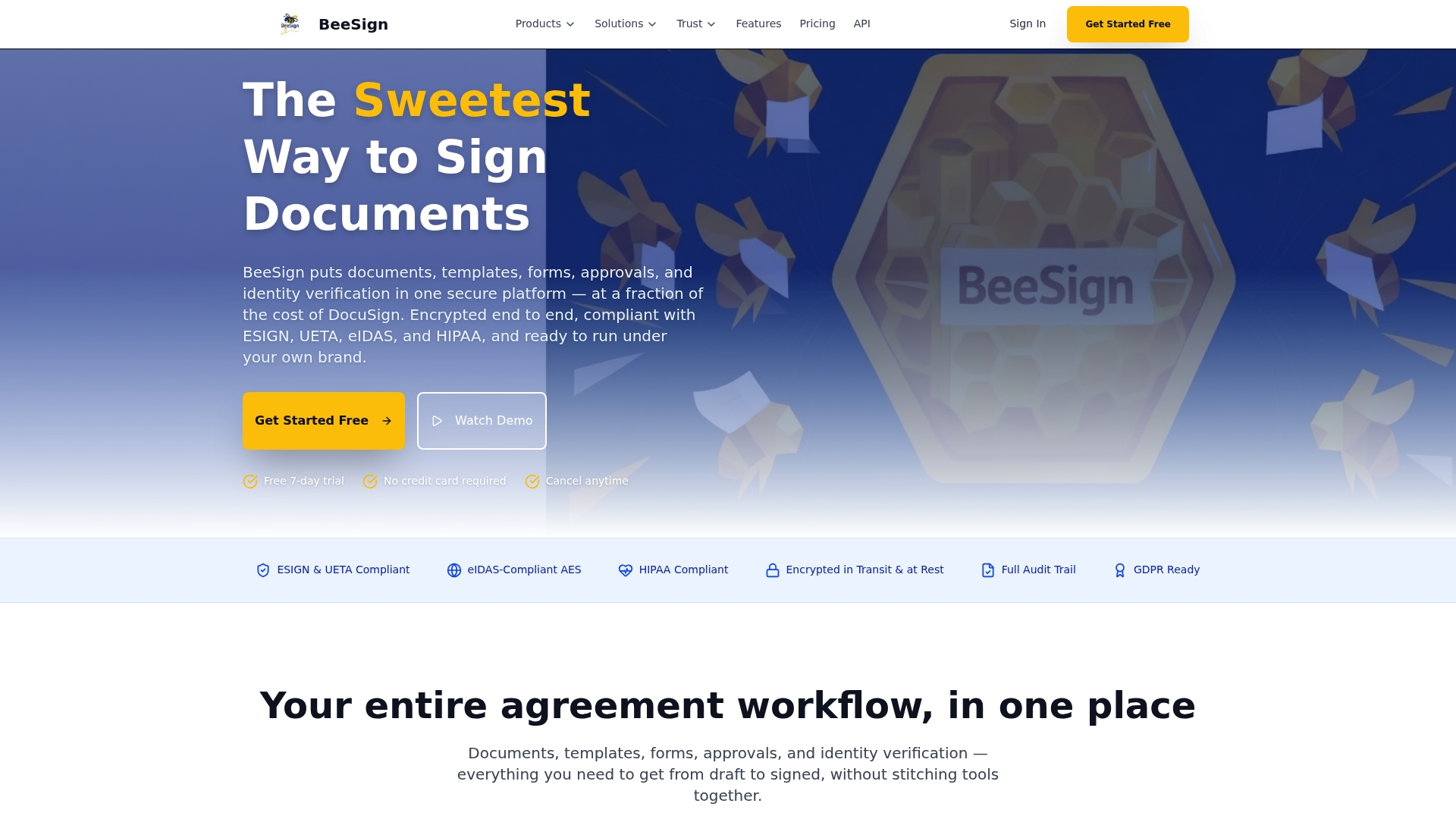
Beesign centralizes contracts, templates, and identity verification in one platform built for compliance with ESIGN, eIDAS, and HIPAA. The platform generates detailed audit logs, supports role-based access control, and keeps data within your infrastructure through its white-label and bring-your-own-cloud options. For institutions managing enrollment at scale, Beesign’s education signing solution provides the workflow controls and contractual framework your compliance team needs. Start with a platform designed to meet the requirements, not one you have to retrofit later.
FAQ
What is FERPA compliance in digital signing?
FERPA compliance in digital signing means your electronic signature workflows protect student PII under the Family Educational Rights and Privacy Act. This requires identity verification, access controls, audit trails, and a signed Data Processing Agreement with your vendor.
Does the ESIGN Act make electronic signatures FERPA compliant?
No. The ESIGN Act establishes the legal validity of electronic signatures but does not address student data privacy. FERPA compliance requires additional controls beyond what ESIGN mandates.
What must a FERPA Data Processing Agreement include?
A FERPA DPA must reference the school official exception under 34 CFR 99.31(a)(1), prohibit data re-disclosure, list all subprocessors, specify breach notification timelines, and include explicit post-termination data deletion requirements.
How do audit trails support FERPA compliance?
Audit trails provide legally defensible proof of who signed, when, and from where. A complete log includes the signer’s identity verification method, timestamp, IP address, and a hash of the signed document.
How often should institutions review their signing vendors for FERPA compliance?
Institutions should conduct documented annual security reviews with every signing vendor. Vendor data practices, subprocessors, and platform configurations change over time, and annual reviews catch compliance gaps before they become violations.
Recommended
Ready to transform your workflow?
Start using BeeSign today and experience the future of document signing