Digital Enrollment Workflow Best Practices for 2026
Discover digital enrollment workflow best practices that minimize processing times and boost student yield, ensuring a seamless registration experience.

A digital enrollment workflow is a structured, automated process that moves applicants, new hires, or vendors through every step of registration without manual handoffs. Institutions that follow digital enrollment workflow best practices reduce document processing cycles from 5.2 to 1.8 days and see a 35% increase in student yield. The industry term for this discipline is enrollment process automation, and it applies equally to university admissions, HR onboarding, and vendor agreement management. Getting it right requires three things working together: system integration, behavioral communication, and regulatory compliance.
1. What are the foundational elements of an effective digital enrollment workflow?
The backbone of any effective enrollment workflow is bi-directional data synchronization between your Student Information System (SIS) and your CRM. Integration failure is the most common deployment pitfall, and it almost always traces back to a one-way data flow that leaves records out of sync. Every status change in the CRM must write back to the SIS in real time, and vice versa.
Automated document verification is the second pillar. When applicants upload transcripts, ID documents, or signed agreements, the system should validate format, completeness, and authenticity without a staff member opening a single file. This automation cuts processing cycle times by roughly 65%, which is the difference between a two-week bottleneck and a two-day turnaround.

Form design matters more than most teams expect. Multi-step forms with save-and-resume functionality and conditional logic keep applicants moving forward. Conditional logic in digital signatures handles complex scenarios like sequential signing in separated-family situations, which paper forms simply cannot manage. Every field that appears only when relevant reduces abandonment.
Key foundational components include:
- Bi-directional SIS-CRM sync to keep applicant records accurate across all systems
- Automated document verification to cut manual review time
- Saveable multi-step forms with conditional logic to reduce abandonment
- Role-based access control so staff see only the records they need
- Audit logging to satisfy compliance requirements from day one
Pro Tip: Map your current data fields in both the SIS and CRM before you configure any integration. Mismatched field names are the single most common cause of sync failures.
2. Which automation strategies best improve enrollment communications?
The optimal enrollment nurture sequence runs 5–7 touchpoints over 7 days using a mix of email and SMS. Time-based drip sequences alone are not enough. Behavioral triggers, fired when an applicant opens a form but does not submit it, outperform time-based messages by 67% for funnel completion rates. That gap is significant enough to make behavioral logic a non-negotiable part of any communication setup.
The most effective trigger points are at 72 hours and 120 hours after an incomplete application action. A message at 72 hours catches applicants who got distracted. A follow-up at 120 hours catches those who need a second nudge before they disengage entirely. Both messages should link directly to the exact step where the applicant stopped, not to the application homepage.
Automated status updates reduce administrative burden just as much as they improve the applicant experience. When a document is received, verified, or missing, the system sends a notification immediately. Staff no longer field “Did you get my transcript?” calls, and applicants feel informed rather than ignored.
- Configure behavioral triggers for form abandonment at 72 and 120 hours
- Use SMS for time-sensitive nudges and email for detailed status updates
- Automate missing document reminders with a direct link to the upload portal
- Send a confirmation message within minutes of every completed action
- Set up a final decision notification that fires automatically when a record reaches a terminal status
Behavioral triggers improve enrollment funnel completion rates by 67% compared to time-based sequences alone. Institutions that switch from calendar-based drips to action-based triggers see the difference within the first enrollment cycle.
3. How can institutions protect data and stay compliant?
FERPA sets the baseline for every education enrollment workflow in the United States. It requires written consent before sharing personally identifiable information, defined data retention schedules, breach notification procedures, and complete audit logs for every record. Any platform that cannot produce a timestamped access log on demand is not FERPA-ready.
ADA Title II and Section 508 compliance apply to every digital form your institution publishes. Non-compliant forms put federal funding at risk and exclude applicants with disabilities from completing the process independently. Every input field needs a label, every error message needs to be screen-reader accessible, and every document upload must have a keyboard-accessible alternative.
Role-based access control protects sensitive records in multi-department environments. An admissions counselor should not see payroll data. An HR coordinator should not see a student’s financial aid file. Access must be architected at the record level inside the CRM, not just at the system level.
| Compliance area | Requirement | Risk of non-compliance |
|---|---|---|
| FERPA | Consent, audit logs, retention schedules | Federal funding loss, legal liability |
| ADA Title II | Accessible forms and documents | Federal funding loss, civil complaints |
| Section 508 | Screen-reader compatible interfaces | Federal contract ineligibility |
| Data breach notification | Timely disclosure to affected parties | Regulatory fines, reputational damage |
Pro Tip: Run an automated accessibility scan on every form before it goes live. Tools like WAVE or axe catch the most common Section 508 failures in under five minutes.
4. What are the best practices for deployment and staff adoption?
A successful deployment follows a structured timeline. 16 weeks is the standard for a full enrollment platform rollout, covering data audits, integration testing, staff training, and a parallel-run period. Rushing past any of these phases creates problems that surface during peak enrollment season, which is the worst possible time to troubleshoot.
SIS write-path validation is the most skipped and most critical step. Test the integration with at least 50 sample records before you finalize any vendor contract. This catches field-mapping errors, permission conflicts, and sync delays before they affect real applicants. Discovering these issues in testing costs hours. Discovering them in production costs weeks.
Staff adoption depends on how you introduce the change, not just what you introduce. Hands-on workshops build proficiency and trust far more effectively than recorded webinars. Involve end-users in vendor selection so they feel ownership over the tool they will use daily.
Run a parallel period during the first enrollment cycle, accepting both paper and digital submissions. This removes the fear of failure from staff and gives you a safety net while confidence builds. Teams that skip the parallel period see higher resistance and more errors.
Deployment best practices include:
- Audit all existing data for duplicates and missing fields before migration
- Validate the SIS write-path with 50+ test records before going live
- Run hands-on workshops for every staff role that touches the workflow
- Accept paper and digital submissions simultaneously during the first cycle
- Assign a dedicated workflow owner who monitors error logs daily
Key Takeaways
Effective enrollment process automation requires integration, behavioral communication, and compliance working together from the start.
| Point | Details |
|---|---|
| SIS-CRM sync is non-negotiable | Bi-directional data sync prevents the most common and costly deployment failures. |
| Behavioral triggers outperform drips | Triggers at 72 and 120 hours improve funnel completion by 67% over time-based sequences. |
| Compliance starts at design | FERPA, ADA, and Section 508 requirements must be built into forms and access controls before launch. |
| Test before you contract | Validating the SIS write-path with 50+ sample records prevents integration failures in production. |
| Parallel runs build staff trust | Accepting paper and digital submissions simultaneously during the first cycle reduces resistance and errors. |
The part most institutions get wrong about enrollment automation
I have worked with education and HR teams that spent months selecting the right platform, configured every trigger correctly, and still saw adoption stall within the first semester. The technology was not the problem. The problem was that staff felt replaced rather than supported.
Automation should handle the repetitive, rules-based work: document verification, status notifications, reminder sequences. It should free your admissions counselors and HR coordinators to do the work that actually moves people, having real conversations with applicants who are on the fence, or supporting a new hire who is anxious about their first week. When you frame automation that way, from the very first training session, resistance drops.
The other mistake I see consistently is treating the applicant experience as secondary to internal efficiency. Modernizing enrollment should let applicants focus on their education or new role, not on figuring out your system. Every friction point you remove is a signal that your institution values their time. That signal matters for yield, for retention, and for reputation.
The future of enrollment management blends technology with human-centered governance. The institutions that get this right are the ones that treat automation as a support structure for their people, not a replacement for them.
— Mustafa Abusharkh
How Beesign fits into your enrollment workflow
Enrollment workflows stall when document signing becomes a bottleneck. Beesign centralizes electronic signatures, identity verification, and document templates in one platform built for compliance with ESIGN, eIDAS, and HIPAA. For education teams, Beesign’s enrollment and administration tools remove the paper chase from acceptance letters, financial aid agreements, and staff onboarding packets.
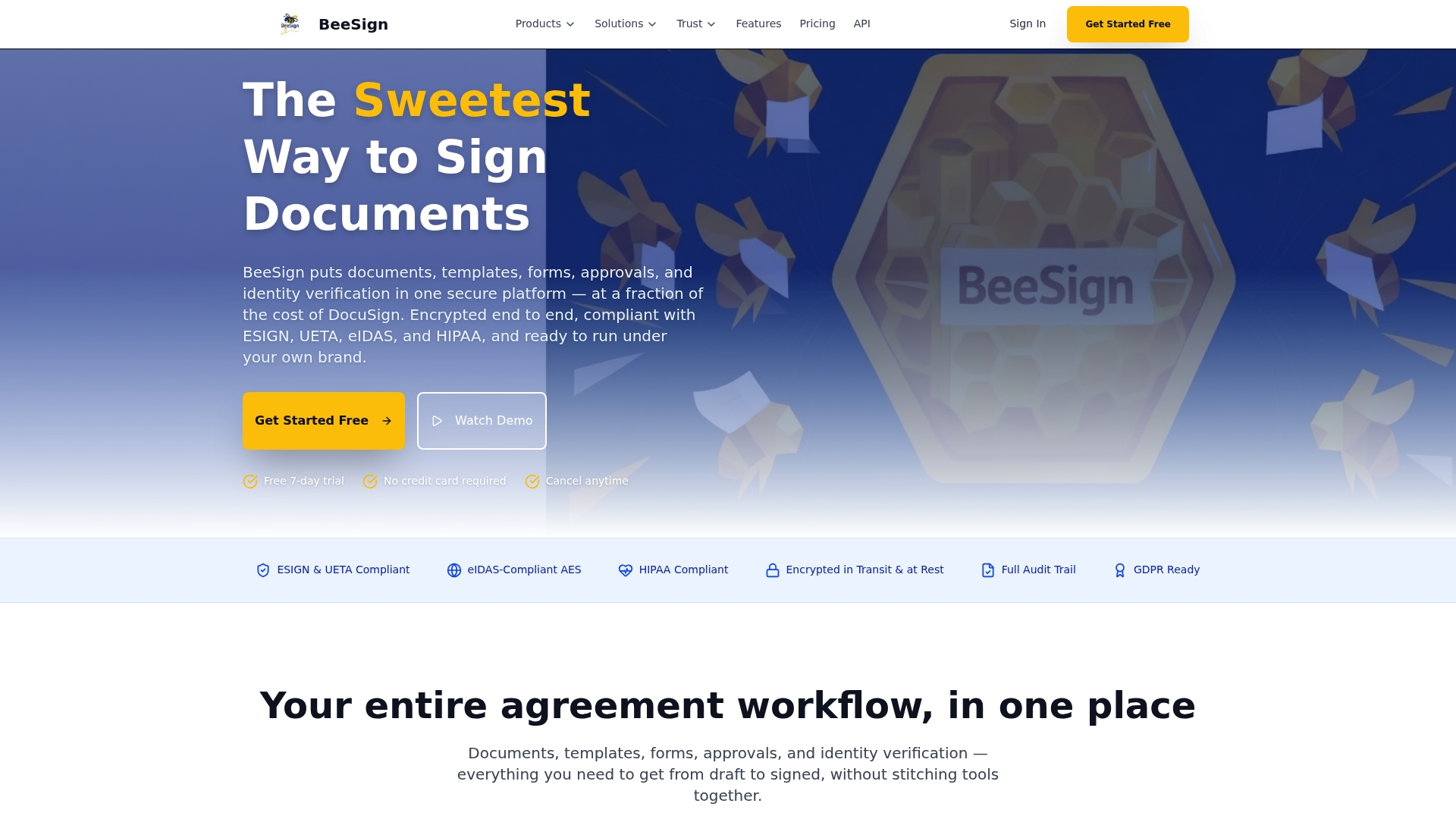
HR teams benefit from automated signature reminders and real-time tracking that show exactly where each document sits in the approval chain. Beesign’s white-label option lets institutions run the service under their own domain, keeping data within their own infrastructure. If your enrollment workflow still relies on printed forms or email attachments, Beesign is a direct path to a faster, auditable, and legally valid process.
FAQ
What is a digital enrollment workflow?
A digital enrollment workflow is an automated sequence of steps that moves applicants or new hires through registration, document submission, and approval without manual handoffs. It typically connects a CRM, SIS, and document platform in a single process.
How much does automation improve enrollment processing speed?
Automated document verification reduces processing cycles from 5.2 to 1.8 days, a reduction of roughly 65%. Institutions also report a 35% increase in student yield after implementing full enrollment automation.
What regulations apply to digital enrollment workflows in education?
FERPA governs consent, data retention, and breach notification for student records. ADA Title II and Section 508 require that all digital forms and documents be accessible to users with disabilities.
How do behavioral triggers differ from time-based email sequences?
Behavioral triggers fire based on applicant actions, such as opening a form without submitting it. They outperform time-based drip sequences by 67% for enrollment funnel completion rates.
How long does it take to deploy a digital enrollment platform?
A full deployment typically takes 16 weeks, covering data audits, SIS integration testing, staff training workshops, and a parallel-run period that accepts both paper and digital submissions.
Recommended
Ready to transform your workflow?
Start using BeeSign today and experience the future of document signing