Digital Identity Trends Changing How Deals Get Signed
Digital identity trends are reshaping signing workflows with stronger verification, better fraud controls, and faster, compliant agreement approvals daily.
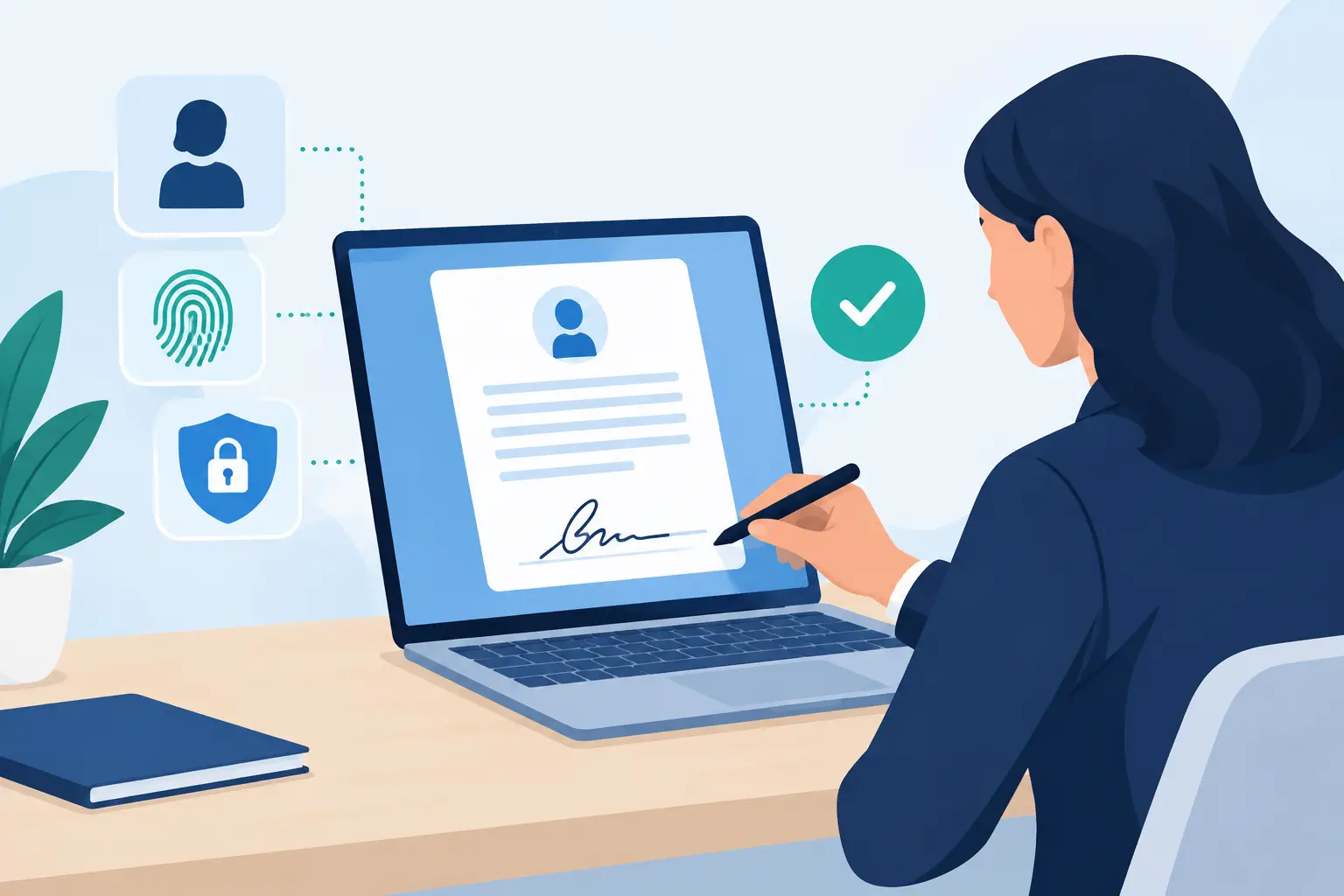
A signature can show intent. It does not always prove who was behind the screen. That gap is driving the most consequential digital identity trends for businesses that handle contracts, onboarding forms, approvals, and regulated paperwork. Teams still need documents signed quickly, but they also need evidence that can stand up to fraud reviews, audits, disputes, and cross-border requirements.
The shift is not toward adding friction to every agreement. It is toward applying the right level of identity assurance to the right moment. A routine internal approval may need a secure login and a complete audit trail. A high-value financial agreement or regulated consent form may justify government ID checks, biometric face matching, liveness detection, and database validation.
Digital Identity Trends Put Assurance Into the Workflow
For years, many digital agreement processes treated identity verification as a separate project. A user would complete a KYC-style check in one tool, sign in another, and leave operations teams to reconcile records later. That approach creates gaps, slows down the customer experience, and makes it harder to show a clear chain of evidence.
The stronger model connects identity and agreement workflows. Verification happens in the same journey where a recipient reviews and signs the document, and the resulting evidence is tied to that transaction. The goal is simple: know who signed, what they signed, when they signed, and what controls were in place.
This matters because fraud has become more convincing. Stolen credentials, forged IDs, social engineering, and AI-generated face or voice content have raised the cost of relying on a name and email address alone. Businesses do not need to treat every signer as suspicious. They do need a workflow that can detect higher-risk situations and escalate verification without creating a maze for legitimate customers.
Risk-based verification replaces one-size-fits-all checks
One of the clearest trends is risk-based identity verification. Instead of requiring the same checks for every recipient, organizations match assurance to the agreement’s value, sensitivity, and regulatory context.
For example, a sales quote may only require email authentication, a signing code, and a timestamped audit trail. An employment agreement involving sensitive personal data may require stronger verification. A financial authorization, healthcare consent, or cross-border contract may call for government ID capture, biometric comparison, liveness detection, and validation against trusted data sources.
This approach protects conversion rates. Asking a low-risk signer to complete a lengthy identity process can cause abandonment. Under-verifying a high-risk signer can expose the business to fraud and weak evidence later. The right threshold depends on your industry, geography, document type, and internal risk policy.
Biometrics move from novelty to fraud control
Face matching and liveness detection are becoming more common because a photo of an ID is no longer enough. A fraudster may have a convincing document image, a compromised account, or a synthetic identity. Liveness detection helps determine whether a real person is present during verification rather than a static image, recording, or manipulated media.
Biometrics can provide a meaningful confidence signal, but they require care. Organizations should be clear about consent, retention, access controls, and the purpose of collection. They should also have a path for people who cannot complete a biometric check due to accessibility, device limitations, or legitimate privacy concerns.
The business case is strongest where impersonation would have serious consequences. For lower-risk workflows, simpler controls may be more appropriate. More verification is not automatically better if it creates unnecessary friction or gathers sensitive data without a clear need.
Identity Evidence Is Becoming Part of the Agreement Record
A signed PDF alone is rarely the full story. When an agreement is questioned, legal, compliance, and operations teams need a coherent record. That record should connect the document version, recipient actions, authentication events, verification outcome, timestamps, IP addresses, and tamper-evident document sealing.
This is why audit trails are moving from a nice-to-have feature to core infrastructure. A strong audit record does not guarantee an agreement will never be disputed. It does give the organization a much better position to explain the signing process and demonstrate that the document was not changed after completion.
For business teams, the practical lesson is to define what evidence each workflow must retain before deploying it. Consider these four questions:
- Which identity signals are required for this document type?
- What event data must be retained for an audit or dispute?
- Who can access verification results and completed certificates?
- How long should identity data and agreement records be retained?
Those answers should be set in templates and policies, not left to each employee’s judgment when a contract is waiting to be sent.
Standards matter, but context matters more
Regulatory frameworks are shaping how organizations think about digital identity. In Europe, eIDAS provides a clear framework for electronic signatures and identity assurance, including Advanced Electronic Signatures for scenarios that need a stronger link between signer and signature. In the United States, enforceability depends on the applicable law, transaction type, consent process, and quality of the evidence.
The point is not to apply the highest available signature level to every document. It is to choose a process that fits the risk and the legal environment. A procurement team signing a routine vendor update has different needs from a healthcare provider collecting patient consent or a fintech company authorizing account activity.
Compliance also extends beyond the signature itself. Privacy rules affect how identity information is collected, processed, stored, and deleted. Security reviews increasingly ask where documents live, how they are encrypted, whether workspaces are isolated, and whether the vendor can support data-control requirements.
Digital Identity Trends Favor Integrated, Controlled Systems
Businesses are reducing the number of disconnected tools used to get an agreement done. Identity checks, forms, approvals, signatures, reminders, completed documents, and audit certificates work better when they are connected. Every handoff between systems can create delays, duplicate records, and uncertainty over which version is authoritative.
An integrated workflow also makes policy enforcement easier. Teams can use approved templates, require the right signing order, add verification only when needed, and route exceptions for review. The result is faster execution without asking employees to become compliance specialists.
For organizations with customer-facing products, the same logic applies to embedded workflows. An API-first approach lets product teams initiate documents, set recipients, manage templates, and retrieve status from their own application. A white-labeled experience can keep the process under the company’s domain and brand, which can improve trust at the critical moment when a customer is asked to verify identity or sign.
Control over storage is another growing consideration. Some companies need completed documents and certificates to remain in their own cloud environment because of internal policy, customer commitments, or data residency requirements. Others prefer vendor-managed storage to reduce operational overhead. Neither choice is universally right. The key is knowing where sensitive agreement and identity data will reside before the workflow becomes business-critical.
How to Prepare Your Signing Process
Start by mapping agreement types rather than shopping for identity features in isolation. List the documents your teams send most often, who signs them, the consequences of impersonation, and the compliance obligations involved. Then define an assurance level for each category.
Next, standardize the workflow. Build templates with the correct fields, approval steps, signing order, expiration settings, and verification rules. This is where speed comes from. A well-designed template prevents repetitive setup while making the approved process the easiest process to follow.
Then test the recipient experience on real devices. A verification flow that looks fine on a desktop can be frustrating on a phone. Check how long it takes, where users hesitate, what happens when verification fails, and how your support team handles exceptions. Keep the process direct, explain why a check is required, and collect only what the transaction genuinely needs.
Finally, treat identity signals as part of a broader security model. Secure access, role-based permissions, encryption in transit with TLS, encryption at rest with 256-bit AES, expiring links, tamper-evident sealing, and detailed audit logs all contribute to trustworthy agreements. No single control carries the entire burden.
BeeSign brings documents, approvals, identity verification, signatures, and audit evidence into one workflow, helping teams move from draft to completed agreement in minutes while applying stronger verification when the risk calls for it.
The practical opportunity is not to make every agreement harder to sign. It is to make each agreement easier to trust. When identity checks, audit evidence, and signing workflows are designed together, your team can move faster with fewer loose ends and a much clearer answer when someone asks: who signed this, and how do we know?
Ready to transform your workflow?
Start using BeeSign today and experience the future of document signing