Property Lease Signing Without the Paper Chase
Property lease signing can move fast without cutting corners. Create a secure, trackable workflow for tenants, owners, and property teams, with proof, too.
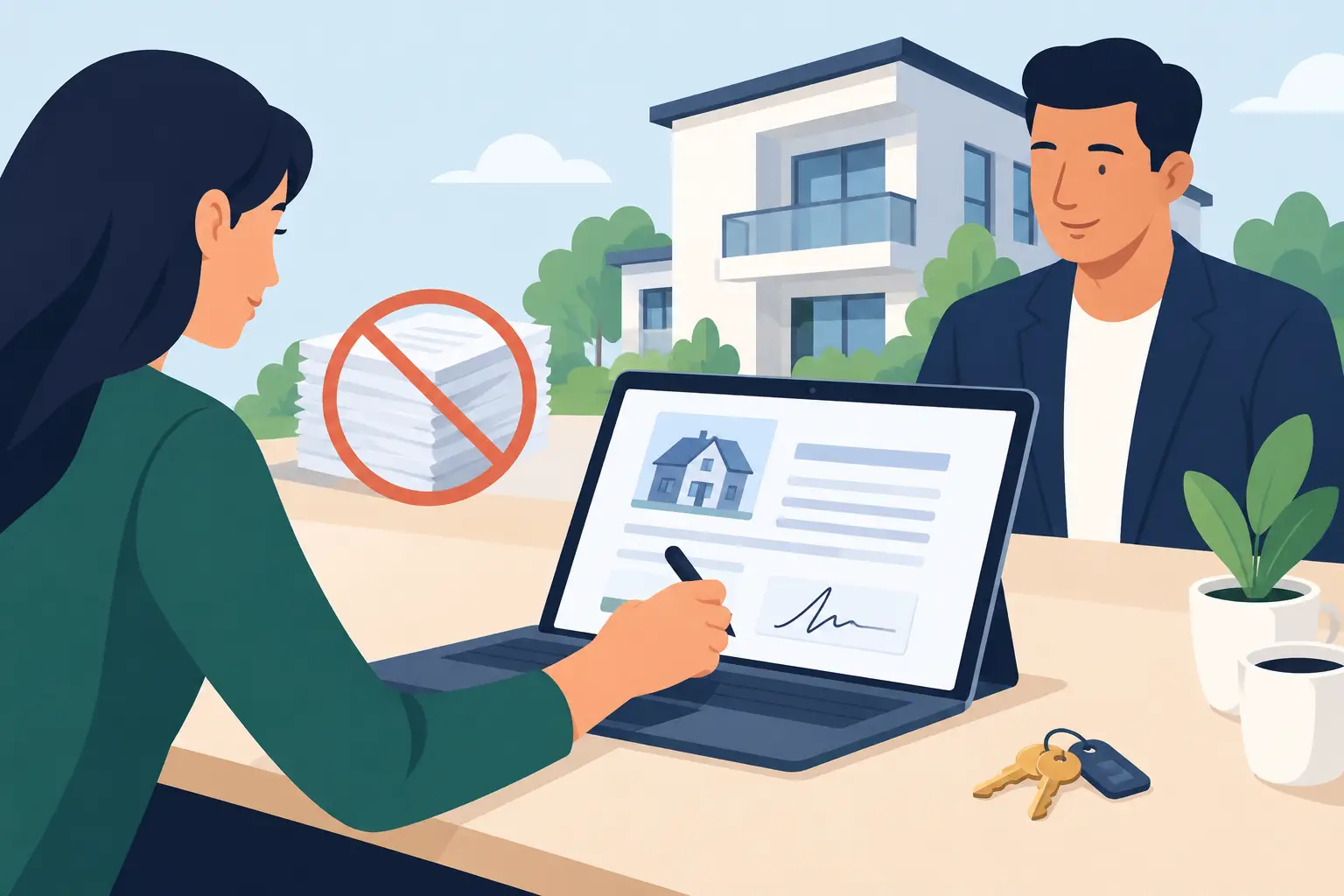
A lease sitting in someone’s inbox for three days can cost more than time. A tenant may keep shopping, a move-in date can slip, and property staff end up chasing the same document through email, text, and voicemail. Property lease signing should move quickly, but it also needs to produce a clear record of exactly what was agreed, who signed, and when.
The answer is not simply sending a PDF and hoping for the best. A reliable lease workflow gives tenants an easy signing experience while giving landlords and property teams the controls, evidence, and visibility they need. Done well, it turns one of the most stressful steps in a rental transaction into a process that is organized, secure, and finished in minutes.
Why property lease signing deserves a real workflow
A lease is not a routine formality. It sets the terms of occupancy, rent, deposits, maintenance responsibilities, renewal conditions, notices, and restrictions. If the property is managed by a team, it may also need internal review before it reaches the tenant. Add guarantors, co-tenants, brokers, or corporate housing contacts, and a simple signature request can become a coordination problem.
Email-based signing creates predictable gaps. Staff may send an outdated template, forget an addendum, lose track of which party has signed, or accept a scanned document without a clear audit record. Those gaps are especially painful when a dispute arises months later and someone needs to confirm the version that was signed.
A digital workflow gives every lease a defined path: prepare the approved document, add the right recipients, set the signing order, collect signatures, and store the completed agreement with its proof of completion. It is faster for tenants and easier for teams to manage at volume.
Start with the right lease package
Speed starts before the signature request is sent. A clean lease package should include the current lease template and every document required for that property, jurisdiction, and tenancy. Depending on the arrangement, that can include disclosures, pet addenda, parking terms, guarantor agreements, lead-based paint disclosures, move-in condition forms, or community rules.
Templates reduce repetitive work, but they need ownership. Assign someone to review templates whenever regulations, property policies, or pricing structures change. A template with old language can create more risk than a slow process.
Use fields, not manual blanks
Pre-fill the details that come from your property management or leasing system: tenant names, unit number, term dates, rent, deposit amount, and renewal options. Then add required fields for initials, signatures, dates, and acknowledgments. Required fields prevent the common problem of receiving a signed lease with a missing initial on page 14.
Keep the tenant-facing experience focused. If an addendum requires a choice, explain it in plain language near the field. If a section is informational only, do not create unnecessary signing steps. Every extra click is another chance for a tenant to abandon the process or contact your team for help.
Set the signing order before you send
Not every lease should be signed in the same sequence. For a straightforward residential lease, a property representative may prepare and approve the document first, tenants can sign next, and the landlord or authorized manager can countersign last. In other cases, the owner may need to approve terms before the lease is offered.
Signing order matters because it stops the wrong version from reaching the wrong person. It also prevents premature commitments when an internal approval or verification step is still pending. For example, if a prospective tenant is waiting on income verification or a final unit inspection, the team may want internal approval before sending the agreement for signature.
For multiple tenants, decide whether each person must sign independently and whether a guarantor signs before or after the residents. The workflow should reflect the legal and operational reality of the deal, not just the fastest-looking sequence.
Make signing easy on any device
Tenants do not schedule their lives around a leasing office desktop computer. They may review a lease during a lunch break, after work, or while coordinating a move from another state. A mobile-friendly signature request removes a major source of delay.
The invitation should clearly state what the document is, what action is needed, and any practical deadline. A short message such as, “Please review and sign your lease for Unit 304 by Friday to confirm your move-in date,” is more useful than a vague email with an attachment.
Avoid requiring recipients to create an account or install an app just to sign. They should be able to open the secure link, review the agreement, complete their fields, and receive confirmation. If a signer has questions, make it easy to pause and contact the leasing team rather than signing under pressure.
Build evidence into the property lease signing process
Electronic signatures are widely used for leases, but enforceability is not about a signature image alone. The process should show intent to sign, connect the signer to the document, preserve the final version, and create evidence of what happened.
A strong audit trail records key events such as when the lease was sent, viewed, completed, and signed. Timestamps and IP address information provide additional context. Tamper-evident sealing helps show whether a completed document was changed after signing.
For higher-risk transactions, identity assurance may be appropriate. A standard lease renewal for a known tenant may not need the same verification as a high-value commercial lease, a remote transaction involving an unknown guarantor, or an agreement subject to stricter cross-border requirements. Government ID capture, biometric face matching with liveness detection, and database validation can provide stronger evidence of who signed when the situation calls for it.
The right level of verification depends on the transaction, local requirements, your risk tolerance, and legal advice. More verification can reduce impersonation risk, but it also adds friction. Use it where the stakes justify it, rather than making every renter complete an overly complex process.
Protect lease data from send to storage
Leases contain sensitive personal and financial information. Names, addresses, contact details, income-related documents, and identification records should not be treated like ordinary email attachments.
Choose a system that protects documents in transit with TLS and at rest with 256-bit AES encryption. Access controls should limit who can create templates, send leases, view completed agreements, or download sensitive attachments. Expiring signing links can reduce exposure if an invitation is forwarded or left open in an inbox.
Storage also matters. Property teams need a dependable system of record, not a collection of files scattered across individual email accounts. Completed leases, certificates, addenda, and audit trails should be stored together and easy to retrieve by property, unit, tenant, or date. Organizations with strict infrastructure policies may also need the option to keep documents and certificates in their own cloud storage.
Track the exceptions instead of chasing everyone
Most lease delays come from a small number of exceptions: a tenant has not opened the request, one co-signer is holding up the file, an internal approver has not completed review, or the tenant needs a corrected document. Real-time status tracking lets the team act on the actual blocker.
Send reminders thoughtfully. A reminder after a reasonable interval is helpful; repeated messages every few hours are not. If a deadline is approaching, a personal follow-up from the leasing contact may be more effective than another automated notice.
When a lease needs to change, do not edit a document that has already been signed. Prepare the corrected version, make the change clear, and send it through a new controlled workflow. This protects the integrity of the record and avoids confusion over which terms govern the tenancy.
Standardize the process across your portfolio
Consistency is where digital signing pays off for growing property teams. Create approved templates for common lease types, renewal agreements, guarantor forms, and addenda. Define which roles can edit them, which approvals are required, and when identity verification should be used.
With a platform such as BeeSign, teams can upload lease PDFs, add drag-and-drop fields, set recipient order, collect signatures, and track each step from one workspace. The goal is not to make leasing feel automated for its own sake. It is to give staff more time for tenant questions, unit readiness, and the decisions that actually need human judgment.
A good lease workflow should feel almost invisible to the people using it. Tenants know what to do. Property staff know what is pending. Managers can find the final agreement and its evidence when they need it. That is how signing stays fast without becoming careless.
Ready to transform your workflow?
Start using BeeSign today and experience the future of document signing